

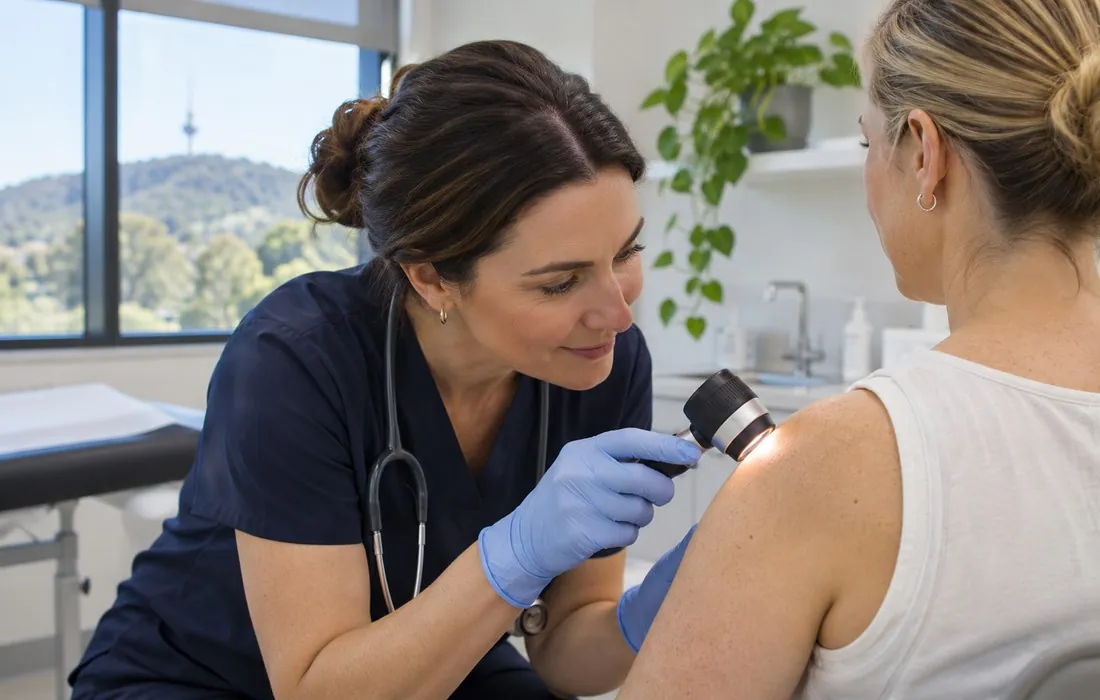
Have you noticed a new spot, a changing mole or a mark that simply does not look like the others? A skin cancer check Canberra residents arrange with their GP can help clarify what needs attention. Not every unusual spot is cancer, but a change deserves a proper assessment rather than guesswork. At Weston Creek Family Medicine in Weston, skin cancer checks and excisions are listed among the practice services. This guide explains the usual steps, what to tell your doctor and how to follow up.
Why a GP skin check is different from checking at home
Looking at your own skin is useful because you know what is normal for you. A GP consultation adds a clinical history and an examination of the spot or areas of concern. A clinician may use magnification or a dermatoscope where appropriate, but the tools and extent of examination depend on the doctor and the reason for the visit. The practice describes skin cancer checks and excisions as an available service; ask reception what type of appointment suits your concern.
Australia does not have a national program that routinely screens every adult for skin cancer. Instead, professional advice focuses on noticing changes, obtaining prompt assessments and considering planned checks for people at higher risk. This matters if you are worried about an individual lesion: you do not need to wait for an annual screening reminder to ask a GP about it.
What happens before and during the visit?
Your GP is likely to ask when you first noticed the mark, whether it has changed and if it has bled, crusted or become sore. You may discuss past skin cancers, strong sun exposure, medicines that affect your immune system and melanoma in close relatives. An accurate history helps the doctor decide whether a lesion needs monitoring, more investigation or a different type of care.
The doctor then examines the relevant skin. If you have several concerns, mention them when booking so enough time can be allowed. Some people need a focused examination of one spot, while others may benefit from a more extensive review based on individual risk. You can discuss the approach with a doctor through the practice’s general practice service, which emphasises preventive care and ongoing patient relationships.
When should you arrange an earlier appointment?
A changing colour, shape or size, an unusual dark streak, a sore that does not heal or a patch that keeps bleeding should be assessed. Some skin cancers are pink, red or skin-coloured rather than dark brown. The well-known ABCDE guide can prompt you to notice changes, but it does not cover every skin cancer and cannot replace an examination. A new or changing lesion is a reason to seek advice even if it seems small or painless.
Try taking a clear, dated photograph for your own record, especially if the change is subtle. Do not use a photo app or an online quiz as a diagnosis. For more context about preventive consultations, WCFM’s health assessments guide outlines how GP-led care can address individual risk factors, although a skin concern should be assessed in its own right.
How to prepare for a useful consultation
Write down when the spot appeared and what has changed. Bring any earlier pathology letters or skin photographs if you have them. Mention previous treatments, strong family history and medication that might influence healing. It can help to wear clothing that makes the concerned area easy to examine. Ask reception whether the booking is for an isolated mole or a wider skin assessment rather than assuming every appointment includes a full-body examination.
A skin check can be part of an ongoing relationship with your usual doctor. If you have never attended the practice, its about page explains the family medicine approach, and the GP team page provides information about the clinicians. You can ask which clinician is appropriate for the type of skin concern you have.
What might happen after the examination?
A GP may reassure you about a harmless finding, suggest a review after an agreed interval, discuss a biopsy or excision, or refer you for specialist advice. A visible spot cannot always be classified with certainty without testing a sample of tissue. If a procedure is discussed, ask why it is recommended, who will do it, whether pathology will be arranged and when you can expect to hear the result.
Costs depend on the consultation and any procedure. Do not assume every skin check or excision is bulk billed. Review WCFM’s published fees and confirm the applicable charges when arranging an appointment. Keep the follow-up plan and the person responsible for communicating pathology results clear before you leave.
Book a GP assessment in Weston
A useful appointment starts with a clear question: which spot has changed, when did you notice it, and what would you like to understand? If you are worried about more than one mole, list each area before you arrive. For marks on your back, scalp or other hard-to-see places, you can point to their location rather than trying to name the feature yourself. Ask whether there is any reason to avoid waiting for a routine visit. If your doctor advises observation, clarify exactly what change should trigger an earlier review. This makes the follow-up plan more practical for patients and carers. A medical assessment remains the safest way to resolve uncertainty about a new or evolving mole.
For a new, changing or worrying spot, contact Weston Creek Family Medicine to discuss the right appointment. The clinic is at 16 Mahony Ct, Weston ACT 2611; phone (02) 6288 6008 or email reception@wcfm.com.au. You can use the linked appointment service, subject to current availability. This information is general guidance and does not replace a doctor’s assessment.
Frequently Asked Questions
Is a skin check only for people with fair skin?
No. All skin types can be affected by skin cancer, although personal risk differs. Ask a GP about a new or changing spot regardless of skin tone.
Does every skin check include a full-body examination?
Not necessarily. The examination depends on your concern and risk history. Tell reception if you want to discuss a broader check.
Can a GP diagnose a mole from a photograph?
A photo may help show change over time, but examination and sometimes a biopsy are needed to clarify a suspicious lesion.
How often should I get my skin checked?
There is no single interval for everyone. A doctor can recommend follow-up based on your risk, previous results and individual concerns.
Can I ask about fees before the appointment?
Yes. Consult the practice fees page and confirm any additional charges for procedures or pathology with reception.
Get in touch to book your appointment
Address: 16 Mahony Ct, Weston ACT 2611
Phone: (02) 6288 6008
Email: reception@wcfm.com.au
Get in Touch: https://wcfm.com.au/contact-us/