
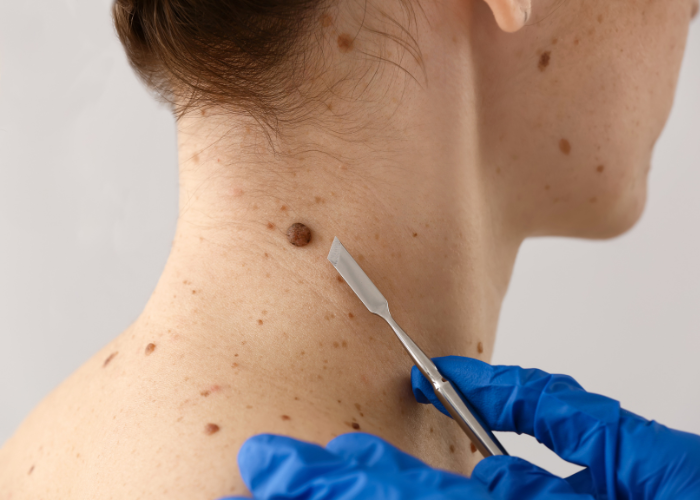
Skin cancer is the most common form of cancer in Australia, largely due to prolonged sun exposure. Regular skin cancer checks are essential for early detection, as it can be lifesaving. Our Skin Cancer Checks & Excisions service offers comprehensive skin examinations to identify early signs of skin cancer and provides prompt excision for any suspicious lesions.
At our clinic, our experienced dermatologists and trained professionals conduct thorough skin examinations, offering both preventive care and treatment options. Whether you are concerned about a new mole or have a history of sun exposure, we’re here to help you monitor and manage your skin health.
What is involved in a skin cancer check?
A full-body exam by a dermatologist to assess moles, spots, and any suspicious skin changes.
How is skin cancer diagnosed?
Through a visual skin exam and, if necessary, a biopsy of suspicious lesions for laboratory analysis.
Do I need a referral for a skin cancer check?
No, you can book a skin cancer check directly; however, a referral may be required for some procedures.
What happens if skin cancer is detected?
Treatment options include excision of the lesion, follow-up care, and possibly further treatments based on cancer type.
How often should I have a skin cancer check?
We recommend regular skin checks every 6-12 months, especially for those at high risk.